Episode 61 · Feature article on the episode
AI with a face: why Meta's Muse and OpenAI's Dots are more than a gimmick
An assistant you can reach by e-mail and WhatsApp, and small figures for individual tasks. The interface to AI is becoming more personal. Whether that is the right way depends on how the user is guided.
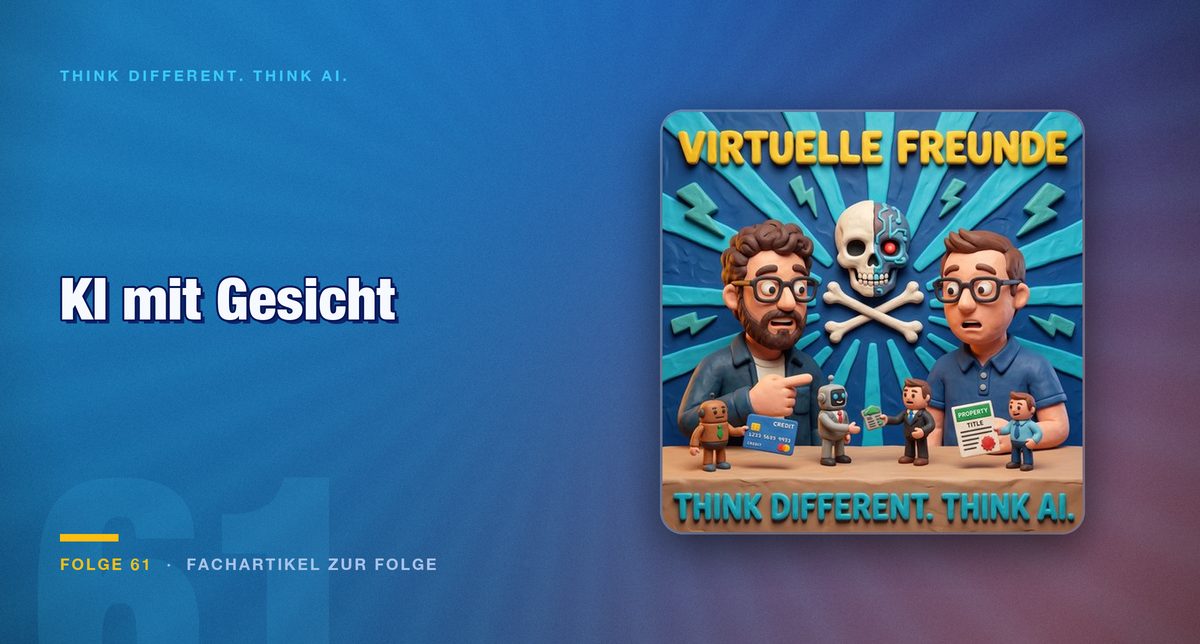
The bet in this episode was really a bet about Christmas. In the previous episode Mark had laughed at Meta's small device for the key ring and promised to invite Jens to dinner if anyone was still talking about it by Christmas. It took less than two weeks. The recording was made at the same table in Karlsruhe, with burgers and shandies, and it is about why AI is now getting a face.
From model to figure
What stands out is how the providers name their products. Jens describes how, in conversations with other providers, he keeps hearing the same question: is this model 5.5 Sol, already 5.6, or is it Fable? Muse dispenses with that layer. The model behind it may change, the name stays. Jens considers that a clever move: AI is taken out of the world of version numbers and turned into a figure with its own name.
Mark thinks the personification is deliberate, but finds the playful part silly. The more important point is something else. A system designed for speech rather than a text box behaves differently. Anyone who works by voice does not get tables read out to them. There is also a fingerprint sensor on the device that confirms purchases and only starts the recording when you touch it. Jens finds this cleaner than devices that listen in by accident.
Dots: many small helpers or one conductor?
The second part concerns OpenAI's Dots. The figures live on the computer and appear for individual tasks: for an error message, an e-mail, an Excel file. Mark describes a demonstration that same morning, where a small avatar pointed at the slide being discussed. He sees the pointing, supportive function as real help. Many small agents on the screen, on the other hand, strike him as a mistake. An orchestrating agent that distributes the work would be the better form.
That distinction matters because it distributes responsibility. Anyone leaving thirty figures running has to know which of them changes something and who answers for it. A conductor concentrates that decision in one place.
The story is older than the technology
Jens places this historically. The personal computer was already the personal access point to the big mainframes. Science fiction had its assistants long before: Bit from Tron, who could only say yes and no, Professor Simon in Captain Future, voice control in Star Trek, Data.
And Clippy. Microsoft's paperclip was meant to help with Word and became a laughing stock. The idea behind it was good, Jens says, the execution was not. Mark asks the question that follows from this: if Clippy was the answer to the complicated Word of its day, are Muse and Dots the answer today?
"The idea behind it was good. The execution just was not."
The real problem is called tokens
Mark counters that all of this burns tokens. He asks whether tokens will eventually become a basic utility like electricity, gas and water. Jens initially expects more consumption: avatars give more people easier access to AI, and more access means more requests. Costs then fall through local and faster models, not through the figure itself.
That reasoning is plausible, but it is an expectation. The episode offers no figures for it, and the statements about subscription prices and token gifts in the audio cannot be reliably attributed. Anyone introducing such models should measure consumption themselves before rolling out an avatar to everyone.
Conclusion
Whether Muse or Dots, the direction is the same: AI should arrive where people already write and speak. The name and the face make it more accessible, but they do not answer the questions of responsibility and cost. An assistant to which you send things the way you send them to friends needs clear rules about what it may do with them.
In practice that means checking which tasks an avatar should take on and which decisions stay with a human. The user guidance decides that more than the figure does.